
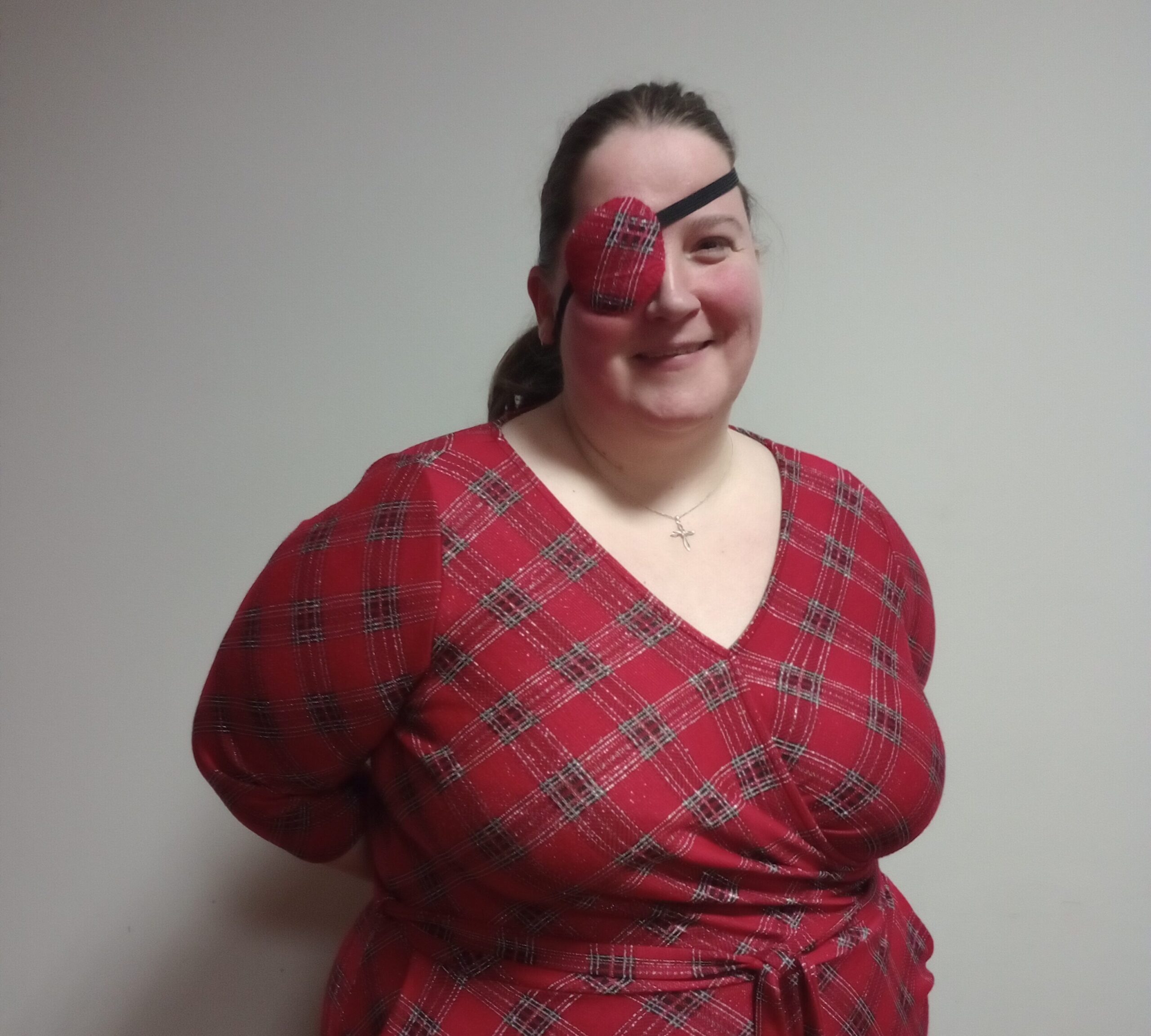
Fiona’s Story
Mid-September 2024 I noticed that my right eye was blurry. Initially I assumed that it was a migraine aura. When it didn’t disappear after the usual 48 hours for my migraines I went to my GP for further checks. This resulted in a Friday night A&E trip where I underwent various tests and checks, including a head CT scan.
This showed something was amiss behind my right eye, but the A&E team weren’t sure what. I was referred for an urgent ophthalmology appointment the next morning where I had lots of scans and photos of the back of my eye taken. They told me I had a detached retina and that there appeared to be a mass behind my eye. They referred me to a specialist team in Sheffield.
On the 9th of October I headed to Sheffield, with my lovely husband, and had even more tests. This included an ultrasound scan of my eyes, which felt as weird as it sounds. I then saw the doctor who confirmed I had a large cancerous tumour in my eye. This was the first time I’d heard of Ocular Melanoma.
The size of my tumour meant the only treatment option available was to have the eye removed (enucleation), and in due course a prosthetic eye made. Honestly, and perhaps oddly, I was relieved as my local ophthalmology team told me the mass was behind my eye I had jumped to “brain cancer”! My initial reaction was “well at least I have two eyes”.
Though it’s a club I wish that neither I or anyone else must join I’m so grateful to OMUK and all the Omies I’ve met (online or in person).
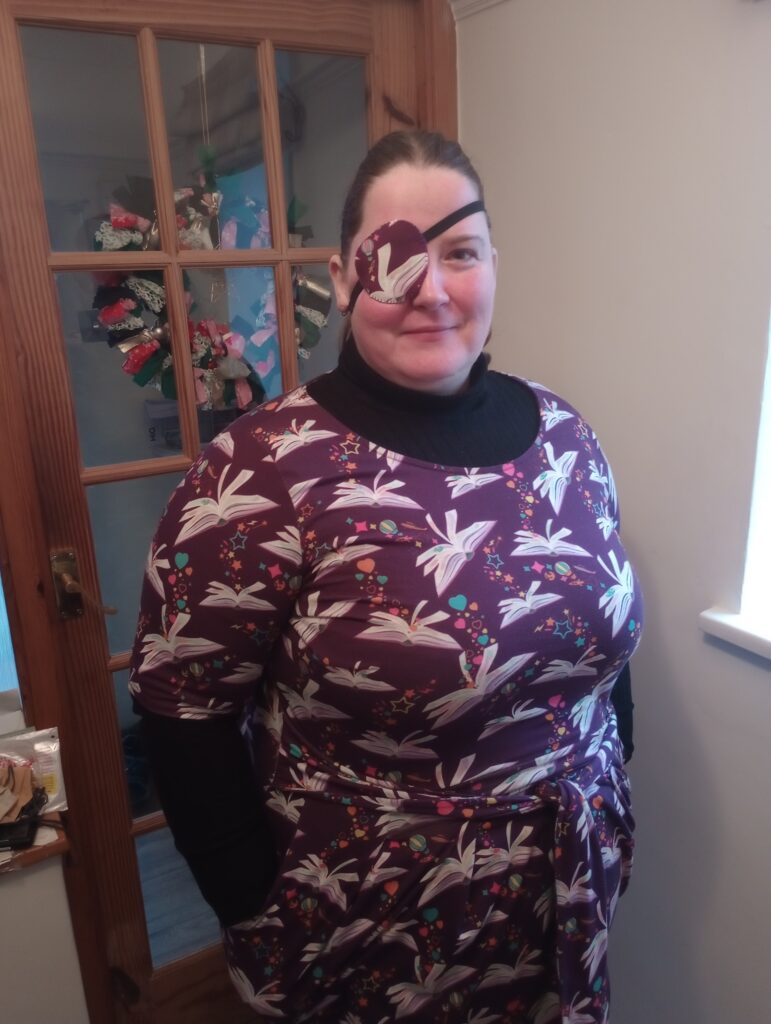
I and my family appear to have a coping mechanism that involves a strange, slightly morbid sense of humour which led to a slightly surreal conversation with my lovely nurse specialist around how many parrot or pirate related gifts I would get for Christmas! I was also made aware, via the team at Sheffield, of Ocular Melanoma UK and the afternoon after my diagnosis I reached out to the charity, became a member and joined the patient support group online.
My eye was removed in November 2024, and in January 2025 I received my first, temporary, prosthetic eye and had the mould made to create my permanent prosthetic.
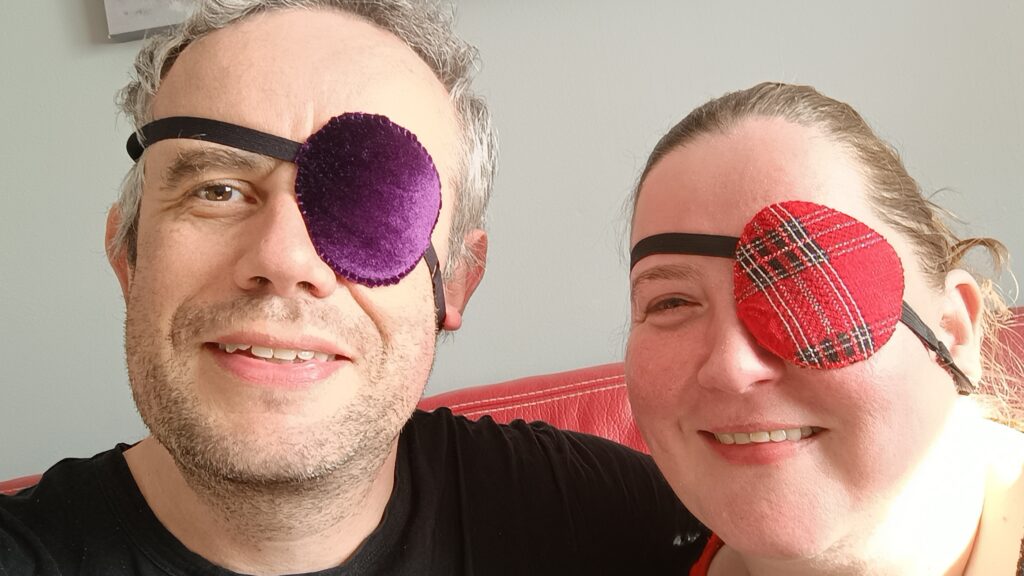
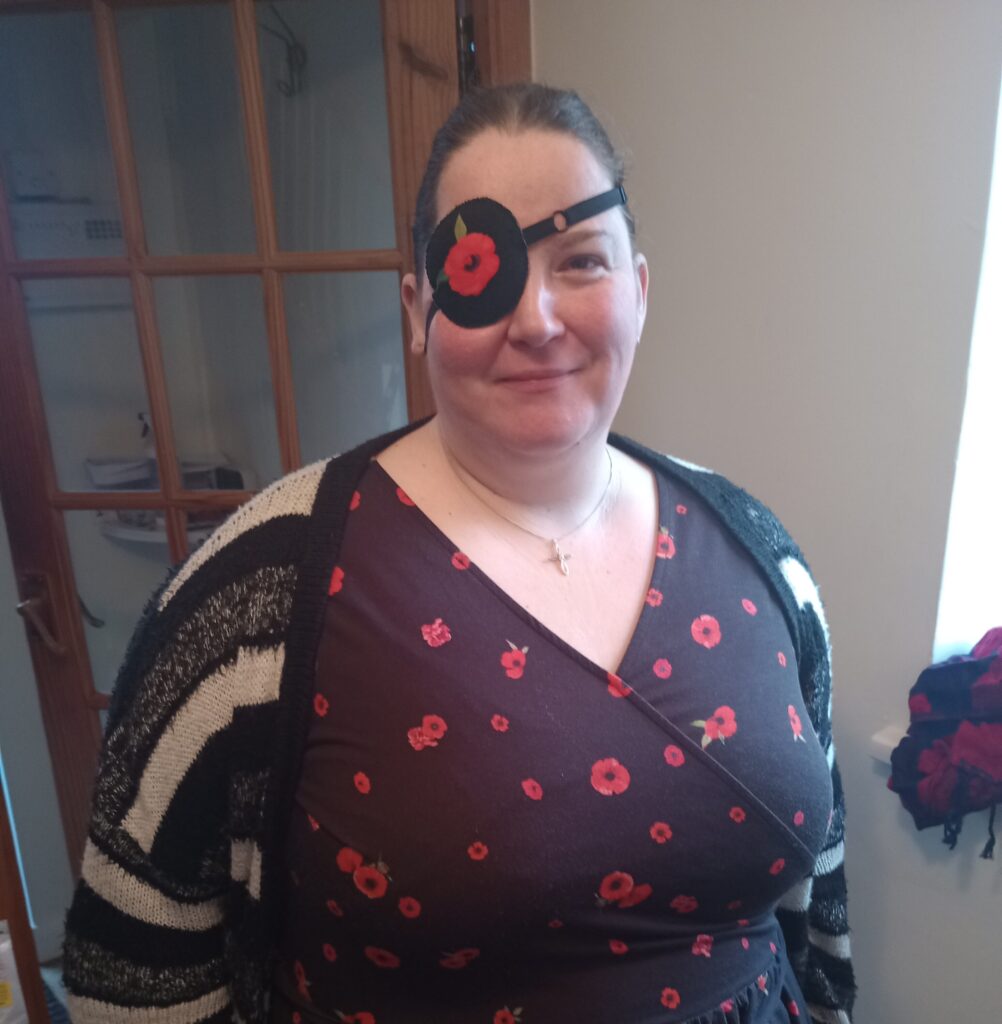
Even now writing that last paragraph feels a little surreal. Whilst waiting for the diagnosis I had several moments of panic and fear, but once I had a treatment plan and knew that I didn’t have any decisions to make about treatment options I kicked into planning mode. I reached out to others in the OMUK patient group to get a sense of what to expect in the days and weeks after my operation and simultaneously reached out to another online group to get some fabric off cuts from my favourite dresses to make eye patches. Afterall, if I’m going to have to wear an eye patch then I might as well look good doing so!
Alongside the amazing support from my family and other OM patients online, I also had a wonderful team of people around me through work and church. I have a close group of people at work, including my manager, who became my own personal cheer squad. They laughingly referred to themselves as my ‘back-up dancers’ and were always around with a hug, chocolate or distraction when needed. I also have some lovely
friends from my church who prayed with and for me. Without the love, support and care from all these people I imagine that my outlook on life would be very different.
Eighteen months after my blurry eye I was signed off from the team at Sheffield and on-going surveillance is now managed by my GP. Whilst I am currently cancer free (or have No Evidence of Disease – NED) having had my eye removed, Ocular Melanoma is unfortunately a cancer that can and does metastasize so I will need regular on-going scans to check. My GP has been good at ensuring that these scans take place as required, and the local ophthalmology team are also checking my eye and socket regularly alongside more standard optician appointments. My other regular check is with the National Artificial Eye Service, and they too have been amazing.
I’m now, fortunately, back doing most of the things I did before this diagnosis, including driving and craft activities. I have however needed to adapt to monocular vision, which means adapting to having no depth perception. The only way I can demonstrate how this impacts me is to encourage you to use an eye patch for a day and go about your usual activities – it really is trickier than you might imagine! What should be a relatively simply task, like walking down the stairs become more challenging, and my new personal bugbear is places that have multiple different flooring types. I can see that there’s a change in the flooring but can’t tell if it’s also hiding a change in height!
How did OMUK help?
Ocular Melanoma UK became a hugely important source of support and information for myself and my family. Through their Facebook groups, community support meetings, support telephone line and confidential counselling I and my family have come to terms with this major change.
They once again became a vital part of my story when I was being signed off from care at Sheffield. I felt a strange mix of relieved that I was well enough and completely bereft at what I perceived as my support net disappearing. I joined one of the online community support meetings and was immediately surrounded by people who quite simply ‘got it’.
After lots of tears and an equal measure of laughter I was better able to cope. I’ve also attended the OMUK Annual Conference which gave me, and my husband, the opportunity to meet with other Omies and hear from different experts in the field, I even got a lesson in applying make-up which I found tricky even when I could see from both eyes!
Being diagnosed with a cancer that most people have never heard of, including many doctors, is challenging.
Just knowing that there are other people who have been through a similar diagnosis and being able to share, support and look out for each other is a lovely reminder that out of horrible situations can come good things.

What is Ocular Melanoma?
Learn about ocular melanoma, its signs and symptoms, diagnosis and treatment.

Patient Stories
Hear from our members and their loved ones about their experience with this rare cancer.

Hope for the Future
Hear about our advocacy work, how you can use your voice and what we have planned for 2027.
Our Corporate Page
Find out how your organisation can get involved this October and explore our resources.