
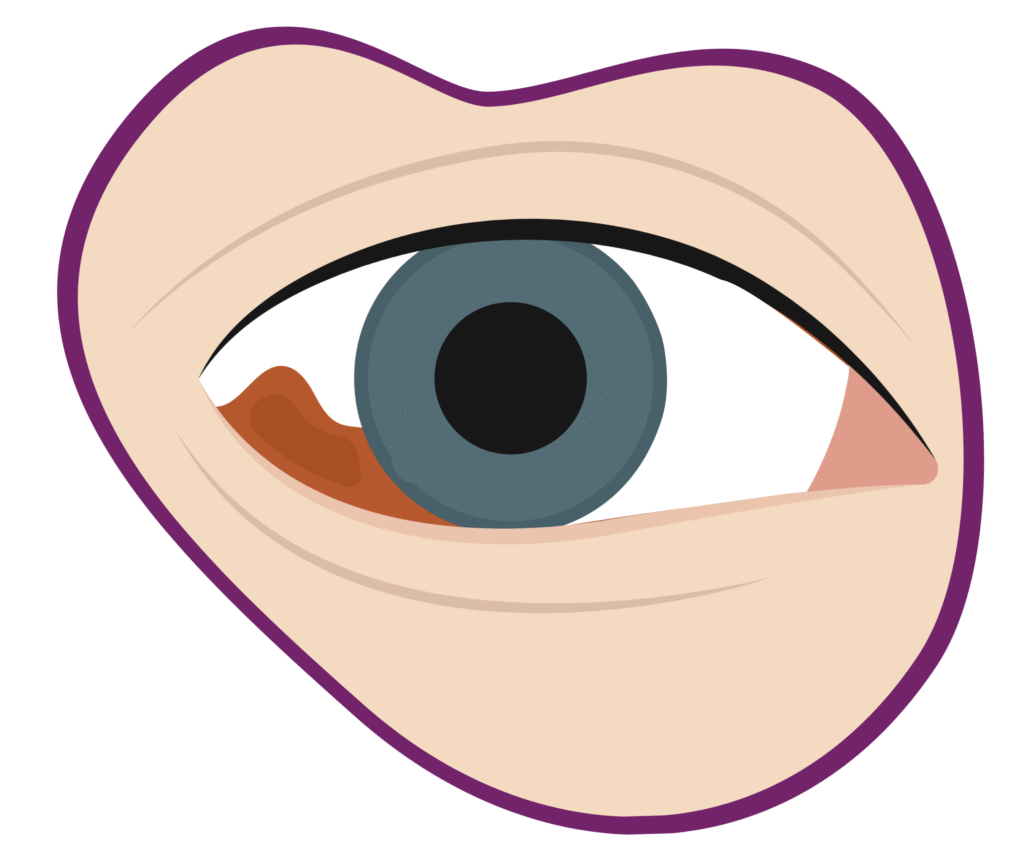
Conjunctival Melanoma
Conjunctival melanoma is a type of ocular melanoma that forms on the transparent layer over the whites of the eye. This is the layer you can see when you look at yourself in the mirror.
This page introduces you to conjunctival melanoma, its symptoms, and some of the treatment options that may be available to you in the UK.
You can find further information about the anatomy of the eye on the About Ocular Melanoma webpage.
Page navigation
What is conjunctival melanoma?
Conjunctival melanoma is a rare form of ocular melanoma.
It forms in the conjunctiva or the transparent layer over the whites of the eye. This is the part of the eye you see when you look at yourself in the mirror.
You may find the information about the structure of the eye on the About Ocular Melanoma page helpful in understanding your cancer better.
Symptoms of conjunctival melanoma
Conjunctival melanomas do not always cause symptoms.
But sometimes, you may find:
- Changes to a nevus
- The appearance of new dark or brown patches in the whites of the eye
- A tumour on the edge of your eye
Other common conditions can also cause these symptoms. It is important to have regular eye tests and have any changes to your vision checked by your GP or optometrist.
Treatments for conjunctival melanoma
Different treatment options are available for people with conjunctival melanomas.
To work out the best treatment for you, your doctors will look at several factors, including:
- The type of ocular melanoma you have
- The size and position of your tumour
- How thick the tumour is
- Whether the cancer has spread
- Your overall age and health
Your medical team will explain your treatment options and side effects, and help you make treatment decisions.
The treatment-related content on our site is currently under review and will be available soon. We apologise for any inconvenience.
While we work on updating this page, please feel free to contact our helpline for any questions or concerns you have.
Watch and wait
Sometimes, doctors may not be sure that what you have is cancer. They may recommend the watch-and-wait approach (also sometimes called watchful waiting or observation).
Sometimes, your cancer may be slow-growing and not require treatment immediately. In these cases, your doctor may recommend the watch-and-wait approach, before starting treatment.
During the waiting period, eye checkups may be recommended every 3-4 months to monitor any growth. A treatment plan will be made if your medical team detect evidence of cancer, such as growth.
Follow-up care
Treatments for conjunctival melanoma are effective, but can cause side effects like soreness, dryness, inflammation, and ‘changes to your vision’. You may wish to discuss potential side effects with your care team and how best you can manage them.
After your treatment, your medical team will also make a plan for you to have regular check-ups or scans to monitor changes to your eye.
This regular imaging is done to make sure everything after treatment is going well. They are arranged so that any changes to your eye are caught early.
Depending on your cancer type, you may also be offered scans for other parts of your body, like your liver. These are called surveillance scans.
If you are worried about having regular or surveillance scans, have related questions, or have any new symptoms, speak to your medical team. They can guide you.
You can also contact us to talk through what is on your mind and how you can find answers to your questions.
Contact us for support
The Ocular Melanoma UK support line offers confidential support to people living with Ocular Melanoma and their loved ones.
Call us on 0300 790 0512
Lines are open Monday – Friday
Email us
Get in touch with us via the form linked in this button here